The dental implant treatment timeline is the full sequence of visits, procedures, and healing stages that take you from your first consultation to your final crown, typically spanning 3 to 9 months. The process includes planning, implant surgery, osseointegration (when the implant fuses with your jawbone), and the placement of a custom crown that completes your smile.
Every timeline looks a little different. Some patients move through treatment quickly, while others need extra steps like bone grafting or extractions before the implant can be placed. The complexity of your case, your overall health, and how your body heals all play a role in the final length of your treatment.
At the heart of the timeline sits osseointegration, the biological process where your jawbone grows around the titanium implant to create a stable foundation. This healing window is why implants take longer than other restorative options, but it’s also why they last so long.
Our team at Laurel Dental Group will guide you through each phase of implant planning so you know what to expect. You’re more than just another smile; you’re family, and we take the time to map out a plan that fits your health, your schedule, and your goals.

How the Dental Implant Process Works: Step by Step
The dental implant process follows a predictable set of steps, even though the exact timing varies for each person. Here’s how treatment typically unfolds at our Laurel office.
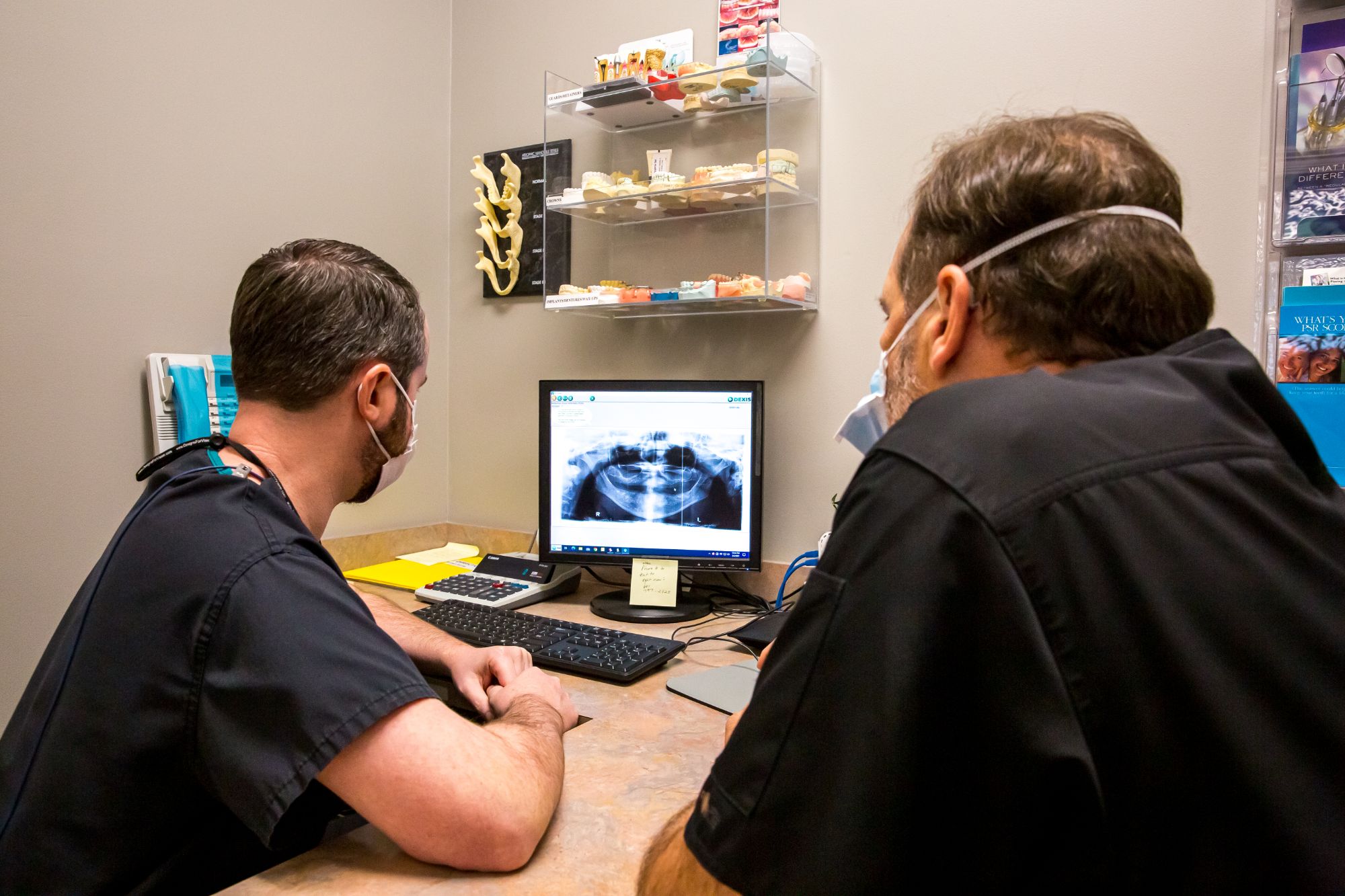
- Complete consultation and imaging. Your first visit includes a full exam, digital X-rays, and often a 3D CBCT scan to evaluate bone density and map the ideal implant position. Our team reviews your medical history, discusses your goals, and builds a custom treatment plan.
- Preparatory procedures. If a tooth still needs to be removed, or if your jawbone needs reinforcement, these steps come first. Extractions are usually simple, while bone grafting may add 3 to 6 months of healing before the implant can be placed.
- Implant placement surgery. The titanium implant post is placed directly into your jawbone during a procedure that typically takes 1 to 2 hours per implant. Most family members return to normal activities within a day or two.
- Osseointegration healing period. This is the longest phase. Over 3 to 6 months, your jawbone gradually fuses with the implant, creating a foundation as strong as a natural tooth root. You’ll wear a temporary restoration during this time if needed.
- Abutment placement and gum healing. Once the implant has integrated, a small connector called an abutment is attached. Your gums shape around it over roughly 2 weeks, preparing the site for the final crown.
- Impressions and final crown placement. Digital impressions capture the exact shape of your bite. Your custom crown is fabricated to match the color and contour of your surrounding teeth, then secured to the abutment at your final visit.
Benefits of Understanding Your Implant Timeline
Knowing what to expect at each stage of implant treatment makes the whole experience smoother. When you understand the timeline, you can plan your life around it instead of feeling caught off guard by appointments or healing windows.
Here’s what a clear timeline gives you:
- Better planning for work and social events. You can schedule surgery and follow-up visits around vacations, holidays, weddings, and busy seasons at work. Most family members only need a day or two to recover from surgery, but it helps to build in a cushion.
- Clear expectations during healing. Osseointegration takes months, and knowing that upfront prevents frustration. Your implant isn’t “slow”; it’s doing exactly what it needs to do to last for decades.
- Improved compliance with aftercare. When you understand why soft foods, careful brushing, and follow-up visits matter, you’re more likely to stick with the instructions. Good compliance shortens healing and protects your implant.
- Early recognition of complications. Knowing what normal healing feels like helps you spot anything unusual, such as persistent swelling, unexpected mobility, or changes in bite. Catching issues early means faster solutions.
- Confidence in your long-term outcome. When you know the science behind each step, you trust the process. That confidence carries through to your final crown and the years of healthy smiles that follow.
A well-planned timeline also protects the longevity of your crown. Implants that are given proper healing time and supported with good hygiene can last a lifetime with routine care. Rushing the process or skipping steps often leads to shorter-lived results.
Traditional Timeline vs. Same-Day Implants vs. All-on-4
Not every implant treatment follows the same schedule. Depending on your case, our team may recommend a traditional staged approach, a same-day immediate load implant, or a full-arch All-on-4 solution. Each has its own timeline, benefits, and candidacy requirements.
| Approach | Time to Temporary Tooth | Time to Final Restoration | Best For |
|---|---|---|---|
| Traditional Implant | After osseointegration (3 to 6 months) | 3 to 9 months total | Most single-tooth and multi-tooth cases |
| Same-Day (Immediate Load) | Day of surgery | 3 to 6 months after surgery | Patients with strong bone and ideal conditions |
| All-on-4 Full Arch | Day of surgery | 3 to 6 months after surgery | Patients replacing a full upper or lower arch |
Traditional implants follow the classic staged timeline. You’ll have surgery, heal through osseointegration, and then receive your final crown. This approach has the longest track record and works for the widest range of family members.
Same-day implants place a temporary crown at the same visit as the implant surgery. You leave with a tooth in place, which is helpful for front-of-mouth cases where appearance matters most. The final crown still waits for full osseointegration.
All-on-4 replaces a full arch of teeth using just four strategically placed implants. A fixed temporary bridge often goes in the same day, and the permanent restoration follows after healing. It’s a solid option for those who want to move away from traditional dentures.
The right choice depends on your bone density, gum health, bite, and lifestyle. During your consultation, our team will help you review which approach fits your situation and why.
Insurance and Financing Options
Dental implant treatment happens in phases over several months, and coverage varies from plan to plan. Our team will review your insurance benefits and financing options with you, including CareCredit, before treatment begins so you know what to expect at every stage.
Who Is a Good Candidate for Dental Implants?
Dental implants work for most adults, but a successful outcome depends on a few key health factors. Your consultation will determine whether you’re ready to move forward or whether a preparatory step is needed first.
Good candidates for dental implants typically share these traits:
- Adequate jawbone density. Implants need a stable foundation. If bone loss has occurred, a graft can rebuild the site before placement. Many family members who were once told they couldn’t get implants now qualify thanks to modern grafting techniques.
- Healthy gums. Active gum disease needs to be treated before implant surgery. Healthy tissue supports healing and protects the implant long-term.
- Non-smokers or those willing to quit during healing. Smoking slows healing and increases the risk of implant failure. Even stopping temporarily during osseointegration makes a meaningful difference.
- Well-managed systemic health. Conditions like diabetes, high blood pressure, or autoimmune disorders don’t disqualify you, but they do need to be under control. Our team coordinates with your physician when needed.
- Commitment to oral hygiene and regular visits. Implants don’t get cavities, but the gums and bone around them still need care. Daily brushing, flossing, and routine cleanings at your dental health home protect your implant.
If any of these areas need attention first, that’s okay. Many of our family members complete a short preparation phase and then move smoothly into implant treatment.

Frequently Asked Questions
What is the timeline for getting a dental implant?
The full timeline typically runs 3 to 9 months from consultation to final crown. Simple cases with strong bone can finish in about 3 to 4 months, while cases needing extractions or bone grafting may take 6 to 9 months or longer. Your treatment plan will include a detailed schedule built around your specific needs.
How does a dental expert attach a crown to an implant?
After the implant has fully integrated with your jawbone, a small connector called an abutment is attached to the top of the implant post. Your gums heal around the abutment for about two weeks, and then your custom crown is secured to the abutment, either with dental cement or a small screw. The result looks and functions like a natural tooth.
What happens during a dental implant consultation?
Your implant consultation includes a full oral exam, digital X-rays, and often a 3D CBCT scan to evaluate bone density and plan the implant position. Our team reviews your medical history, discusses your goals, and builds a custom treatment plan with a clear timeline. You’ll leave knowing what to expect.
Does implant crown placement hurt?
Final crown placement is one of the most comfortable steps in the whole process. Because the implant and abutment are already in place and the gums have healed, attaching the crown usually involves no anesthesia and no discomfort. Most family members describe it as similar to a regular dental visit.
How long after implant surgery can I eat normally?
You’ll stick to soft foods for about 7 to 14 days after implant surgery to protect the healing site. Many family members gradually reintroduce firmer foods within two weeks, though you’ll avoid chewing directly on the implant site until osseointegration is complete. Your temporary restoration, if you have one, is designed for everyday eating with care.
What delays an implant timeline?
The most common reasons for a longer timeline include bone grafting, sinus lifts, treatment of gum disease, and slower-than-average healing. Smoking, uncontrolled diabetes, and certain medications can also extend healing time. Our team flags any potential delays during your consultation so your plan reflects realistic dates.
Ready to find out whether dental implants are right for you? Our team at Laurel Dental Group, located at 1615 Old Amy Road in Laurel, MS, has been creating healthy smiles for 35+ years and would love to welcome you as part of our family. Give us a call at 601-649-2010 or schedule your consultation online to start planning your new smile today.